
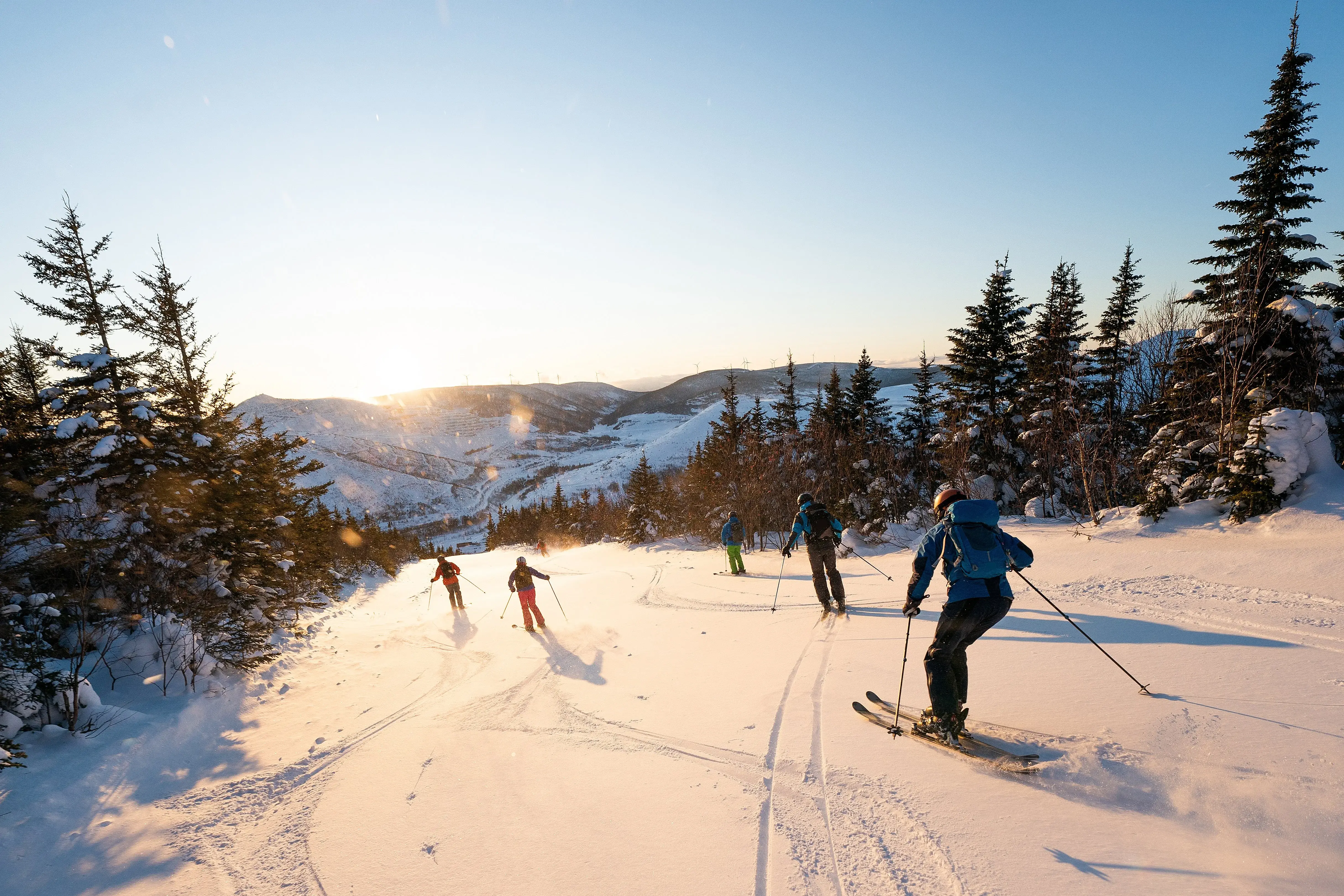
Intro to Backcountry Skiing and Splitboarding
Open the Door to More Powder and Less Crowds
Trip Description
Intro to Backcountry is a two-day course designed to equip skiers and splitboarders with the foundational skills needed to confidently venture beyond the resort. Led by a certified ACMG guide, the course emphasizes safety, terrain assessment, and trip planning, blending expert instruction with hands-on experience. Through backcountry laps and real-time coaching, you'll build the skills necessary for safe, efficient travel in variable conditions.
This course is ideal for those who are comfortable on skis or a splitboard in a resort setting in mixed terrain including tighter tree skiing, but are new to backcountry travel. This is not a learn to ski course. If you're eager to explore off-piste terrain but unsure how to begin, this course will guide you through the first steps with a focus on risk management, route selection, and group travel techniques.
Included in the course are professional guiding services, group safety equipment (such as first aid kits and emergency supplies), and a copy of the Alpine Club of Canada's Winter Backcountry Leader Manual for continued learning. Participants are responsible for their own personal ski or splitboard setup, avalanche safety gear, and food for the day. A gearlist and equipment rental information can be found here.
Itinerary
The main focus of this course is to equip you with the skills needed to start exploring the backcountry independently. Key topics of learning include:
- Terrain decisions
- Safe travel practices
- Hazard assessment
- Efficient transitions
- Layering systems
- Backcountry equipment and what to pack
- Basic companion rescue
- Trip planning
Although some aspects of avalanche safety will be covered, this is not a specialized Avalanche Safety Training course. We strongly recommend taking an AST course in addition to this one.
Our guides will be as accommodating as possible to each individual’s unique goals and requirements, so feel free to come prepared with specific questions or learning requests.
Evening session
Participants meet online at 6:00 pm MST via zoom, for a one-hour session to cover gear expectations. This pre meeting will break down the basic trip planning needed for a winter backcountry outing: research and resources, trip planning, weather considerations, hazard evaluation, difficulty assessment, basic backcountry gear systems, emergency gear, and clothing layering systems.
Day one
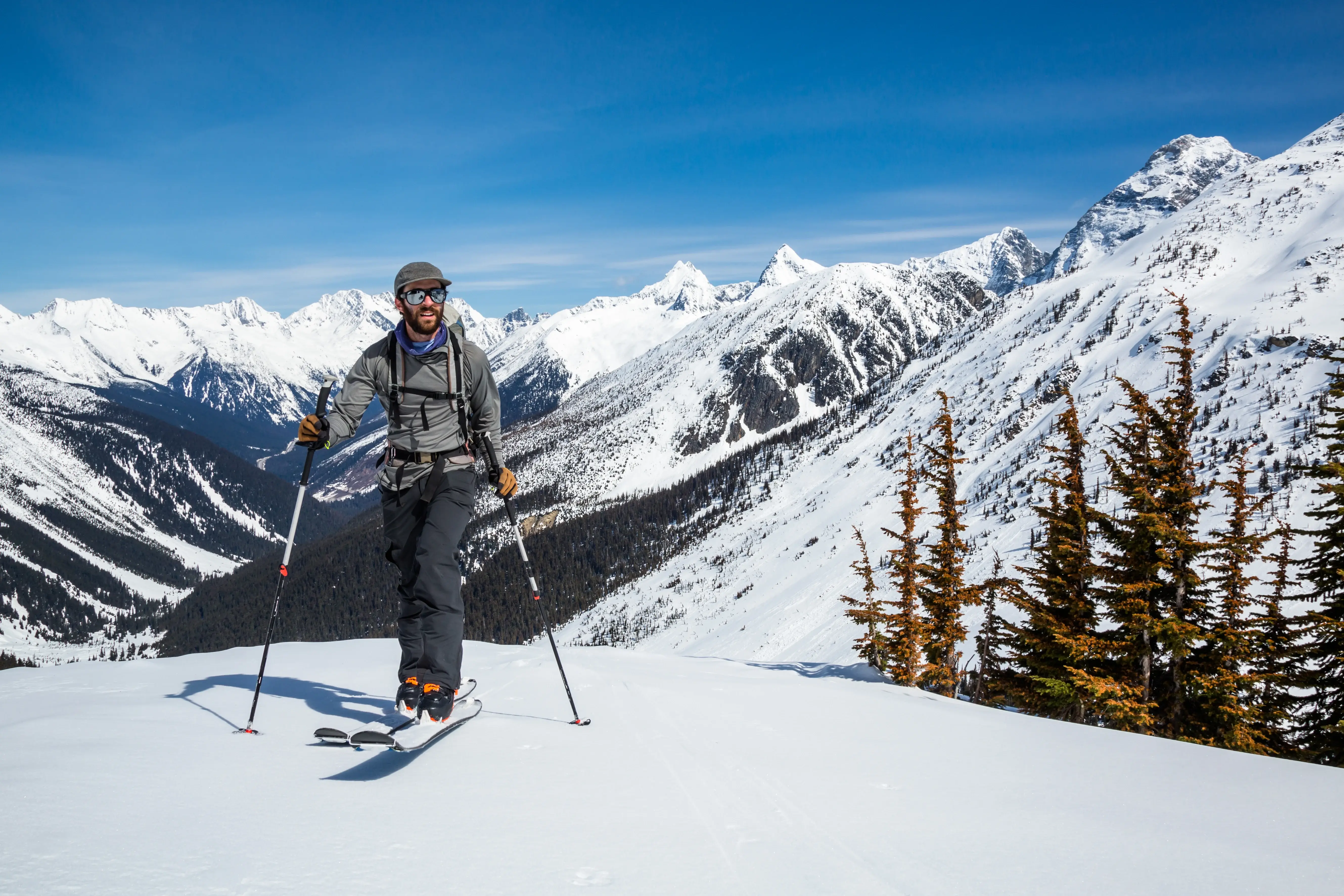
We'll meet at a pre-determined location and go over gear, avalanche safety and the day's objectives. We'll ski short laps, focusing on using on using skins for efficiency uphill; modelling safe travel and group management techniques in avalanche terrain; as well as learn some tips and tricks for downhill skiing in backcountry conditions.
Day two
Day two will have an early morning start, and the group will travel to the course area. Following a safety briefing and discussion, we'll be able to ski longer laps, refining our skills for efficient and safe travel.
Location
Bow Valley
Basing the course out of the Bow Valley allows access to perfect learning environments in nearby Kananaskis and Banff National Park. These world class skiing locations will allow us to head wherever the snow is best!
We sell Tugo® Travel Insurance suitable for both ACC Adventures and personal trips.
Learn MoreAdventure Hazards
-
Avalanche:
Risks include but are not limited to: Avalanches can occur in the terrain you will be entering. Caused by natural forces, or by people travelling through the terrain (skiing/snowboarding). Anyone caught in an avalanche is at risk of personal injury, death, and/or property damage or loss. -
Communication & Rescue:
Risks include but are not limited to: Communication can be difficult and in the event of an accident, rescue and treatment may not be available. Adverse weather may also delay the arrival of treatment and transport out of the field. If an Injury occurs in challenging terrain movement to an evacuation point may be slow. -
Terrain:
Risks include but are not limited to: Cornices, Crevasses, Cliffs, Trees, tree wells, forest dead fall, and tree stumps, Creeks, rocks and boulders. Holes and depressions below the snow surface. Variable and difficult snow conditions. Variable and difficult walking terrain. Snowcat roads and road banks, fences and other man-made structures. Snow immersion. Impact or collision with other persons, vehicles or objects. Extreme variation in trails or terrain. Encounters with domestic or wild animals. Loss of balance or control, slips, trips, and falls. Becoming lost or separated from the group. -
General:
Risks include but are not limited to: Slips, trips and falls indoor or outdoor. Equipment failure. Infectious disease contracted through viruses, bacteria, parasites, and fungi which may be transmitted through direct or indirect contact. Negligent first aid. Negligence of other persons, including other guests. Negligence of the guide including failure to take reasonable steps to safeguard or protect you from, or warn you of risk, dangers, hazards, on participating in ACC activities. Changing weather conditions including but not limited to high winds, lightning, forest fires, effects of high altitude including pulmonary edema and cerebral edema, incomplete warnings or instructions, negligence of other people, including trip coordinator and other guests. Negligence includes failure on the part of ACC Guides (if applicable) to take reasonable steps to safeguard or protect you from or warn you of the risks, dangers and hazards of wilderness activities. -
Boots & Binding Systems:
Risks include but are not limited to: Even when set up correctly, a ski binding might not release during every fall or may release unexpectedly. The ski boot/binding system is no guarantee that the skier will not be injured. Non-DIN-certified bindings, such as pin/tech bindings, present a higher risk of pre-release and/or injury as they are not designed to the same safety standards as a DIN-certified alpine binding.
Unlike alpine ski boot/binding systems, snowboard and some telemark boot/binding systems are not designed or intended to release and will not release under normal circumstances. Using such a system increases the risk of injury and/or death when caught in an avalanche.
Intro to Backcountry Skiing and Splitboarding
Please complete the form below to register.
Registering as:
friend
To complete your registration, please read and accept the following waiver

The Alpine Club of Canada Waiver
Version 2.0
A valid ACC Release of Liability is required to participate in any ACC activities or events. Please read the following waiver carefully. ALL checkboxes must be checked in order to submit the agreement.

Signed Waiver
Please note: Liability for this event registration is covered by the waiver you signed on .
AST As a final step before payment, please complete the following event specific waiver
Avalanche Canada Release of Liability
Version 2.1
A valid Avalanche Canada Release of Liability is required to participate in any Avalanche Safety Training program facilitated by The Alpine Club of Canada