
Description du voyage
This course is designed for current or aspiring local section climbing trip coordinators who want to strengthen their leadership skills and bring that knowledge back to support trip programming within their section(s).
The focus of this course will be on the skills needed to run a top rope crag session, including hazard management, anchor building, rope management, rescue skills and more! See the trip itinerary for a full breakdown. You should be comfortable lead climbing 5.10- outdoor sport routes before applying for this course.
Included in the camp fee - Guiding and instruction at a 1:5 ratio
Not included in the camp fee - Accommodation and food
Members from any local sections across Canada can apply. Application deadline is on Monday, May 31st at midnight (PT).
Leadership at the ACC
Mountain leadership development is part of The Alpine Club of Canada’s mandate. Hundreds of volunteers give their time at both the Section and National levels to ensure other ACC members have a safe and enjoyable time in the mountains. To support the leadership development needs of these tireless and invaluable volunteers, The North Face and The Alpine Club of Canada offer Mountain Leadership Courses for activity organizers from all ACC sections. We offer 2-3 regionalized courses a year in collaboration with local sections that cover all the activities the club provides. If you have a course you would like to see, have your section contact the leadership committee at leadership@alpineclubofcanada.ca with your ideas!
The principal objective of these courses is to empower ACC volunteers by enhancing their leadership skill sets. The leadership courses emphasize the ‘human-factor’ in leaders’ decision-making and the creation of inclusive, enjoyable experiences, applicable to ACC activities across Canada. To increase accessibility these courses are subsidized by the ACC’s leadership development fund. While this course is based out of the Squamish region members from any section across Canada are encouraged to apply!
If you want to hear more about how our most recent leadership course went check out the links below!
Le CAC soutient le ski de randonnée dans l'Est!
Itinéraire
Online session #1 (August 3, 6:00pm-8:00pm PT)
- Introductions
- Creating a welcoming environment
- The ACC process (putting a trip together for your section)
- Trip planning, setting expectations
Online session #2 (August 4, 6:00pm-9:00pm PT)
- Trip logistics and planning
- Equipment
- Risk Assessment
- Weather & conditions
Field day 1: Top-Rope Sessions
- Pre-trip communications
- Equipment and layering
- Climbing ethics and etiquette
- Top rope hazard management
- Top rope anchors: configurations, access, rope management, etc.
- Teaching top-rope belaying/communication skills (and confirming participant’s competency)
- Group management: coaching/mentoring, supervision, conflict, decision making
- Site teardown and departure
Field day 2: Climbing movement and rescue skills
- Group management: coaching/mentoring, supervision, conflict, decision making
- Review of day 1 content, with participants leading the discussion
- Climbing movement skills
- Rescue scenarios
Field day 3 / 4: Practice of above
- Supervised/monitored increase of independence on both technical and leadership skill practice and development
Overarching curriculum objectives (to be integrated throughout the course)
- Establishing trip objectives
- Group management
- Conflict Resolution
- Situational Awareness
- Coaching/mentoring
- Group decision making
Additional material may be covered based on the group!
Lieu
Squamish
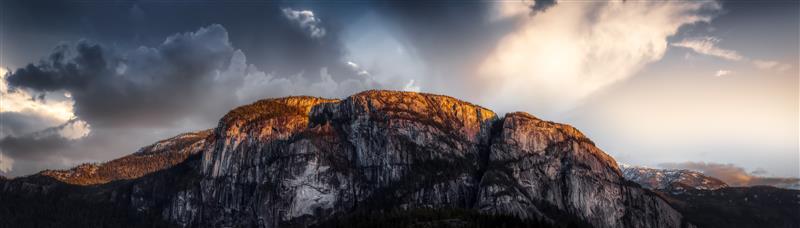
Squamish, British Columbia, is one of Canada's premier rock climbing destinations, nestled between the Coast Mountains and Howe Sound The wider Squamish area offers an incredible diversity of climbing across hundreds of crags. The granite here is renowned for its quality: rough, featured, and reliable, lending itself to everything from beginner single-pitch routes to serious multi-day big wall adventures. With a mild (if rainy) climate, a thriving outdoor community, and world-class climbing accessible year-round, Squamish has firmly cemented its reputation as a must-visit destination for climbers of every discipline and ability level.
Nous vendons l'assurance voyage Tugo®, adaptée aux aventures du CAC comme aux voyages personnels.
En savoir plusDangers de l'aventure
-
Chutes de pierres:
Les risques peuvent inclure, sans s'y limiter : Les chutes de pierres peuvent être causées par des forces naturelles ou par des personnes qui circulent dans le terrain (p. ex. escalade/varappe/randonnée). -
Communication, secours et traitement médical:
Les risques peuvent inclure, sans s'y limiter : La communication peut être difficile et, en cas d'accident, les secours et les traitements peuvent ne pas être disponibles. Les intempéries peuvent aussi retarder l'arrivée des traitements et le transport hors du terrain. Si une blessure survient dans un terrain difficile, le déplacement vers un point d'évacuation peut être lent. -
Terrain non contrôlé:
Les risques peuvent inclure, sans s'y limiter : Le terrain est non contrôlé, non balisé et non inspecté, et peut comprendre : corniches, crevasses, falaises, arbres, puits d'arbre, chablis forestiers et souches, ruisseaux, roches et blocs, trous et dépressions sous la surface de la neige, conditions de neige variables et difficiles, terrain de marche variable et difficile, chemins de chenillette et talus, clôtures et autres structures artificielles, enfouissement dans la neige, impact ou collision avec d'autres personnes, véhicules ou objets, variations extrêmes des sentiers ou du terrain, rencontres avec des animaux domestiques ou sauvages, perte d'équilibre ou de contrôle, glissades, trébuchements et chutes, ainsi que le fait de se perdre ou d'être séparé de son groupe. -
Autres risques:
Les risques peuvent inclure, sans s'y limiter : Glissades, trébuchements et chutes, tant à l'extérieur qu'à l'intérieur. Conditions météorologiques changeantes, y compris, sans s'y limiter, les vents violents, la foudre et les feux de forêt. Effets de la haute altitude, y compris l'œdème pulmonaire et l'œdème cérébral. Maladies infectieuses contractées par des virus, bactéries, parasites et champignons, qui peuvent se transmettre par contact direct ou indirect. Défaillance de l'équipement. Avertissements ou instructions incomplets. Premiers soins négligents. Négligence d'autres personnes, y compris le coordonnateur de la sortie et les autres participants. -
Chutes et assurage:
Les risques peuvent inclure, sans s'y limiter : L'escalade de rocher présente le risque de chuter de la paroi, ce qui peut faire heurter au grimpeur la paroi ou le sol et entraîner des blessures ou la mort. Le risque de défaillance de l'assurage est également présent, ce qui peut contribuer au risque d'une chute au sol. La défaillance de l'équipement constitue aussi un risque, y compris l'équipement associé à l'escalade, à la descente en rappel et à l'assurage.
À propos de vous
Personne à contacter en cas d'urgence
Confirmez ou mettez à jour votre personne à contacter en cas d'urgence pour cet événement.
Santé
Ces renseignements ne sont communiqués qu'à l'équipe qui coordonne votre aventure.
Comprend des maux de tête intenses, des nausées, des vomissements ou d'autres symptômes en altitude.
Veuillez inclure les allergies et intolérances environnementales, médicamenteuses, alimentaires, etc.
Anaphylactique = réaction grave nécessitant un auto-injecteur d'épinéphrine.
Profil d'aventure
Renonciation

The Alpine Club of Canada Waiver
Version 2.1
A valid ACC Release of Liability is required to participate in any ACC activities or events. Please read the following waiver carefully. ALL checkboxes must be checked in order to submit the agreement.
The Alpine Club of Canada – Minors Waiver
Version 1.0
A valid ACC Release of Liability is required for a minor to participate in any ACC activities or events. This waiver must be completed by the minor's parent or legal guardian. Please read the following waiver carefully. ALL checkboxes must be checked in order to submit the agreement.
Signature du parent ou tuteur requise
Vous n'avez pas atteint l'âge de la majorité dans votre province. Nous avons besoin d'un parent ou tuteur légal pour signer cette renonciation en votre nom. Veuillez fournir leurs coordonnées ci-dessous.
En attente de la signature du parent
- Renonciation pour mineur du CAC
- Renonciation pour mineur AST
Révision et consentement
Conditions de participation
Consentements supplémentaires
J'accepte que le CAC utilise les photos ou vidéos de moi prises pendant le cours du CAC aux fins de ses publications et de son marketing. Je renonce à mon droit d'examiner ou d'approuver l'utilisation de mon image dans les médias du CAC. J'accepte également de ne réclamer aucune compensation au CAC si mon image ou ma vidéo est utilisée aux fins indiquées ci-dessus. Je libère le Club Alpin du Canada, ses employés, entrepreneurs, bénévoles et successeurs de toute réclamation pouvant découler de l'utilisation de mon image, y compris toute réclamation pour atteinte à la vie privée, violation des droits moraux, du droit à l'image ou du droit d'auteur.
Paiement